
Cataract Surgery Essentials - Prostate Medications and Cataract Surgery

Prior to cataract surgery the iris must be dilated in order for the surgeon to get to the lens (or cataract).  This is done both to obtain good visualization of the cataract and to protect the pupil which is a very delicate tissue and is easily damaged when it comes into contact with metal instruments.
A few years ago an ophthalmologist in the bay area, Dr. David Chang noted that the iris of certain patients would become “floppy” during cataract surgery and dilation of the pupil would be lost.  This resulted in a very poor view through the small pupil, increased intraoperative complications (secondary to the poor view), and damage to the iris (because it flopped around inside the eye during surgery).  This syndrome became known as Intraoperative Floppy Iris Syndrome (or IFIS).
Drs. David Chang, and John Campbell, with the help of others collected all the information they could about these patients and discovered that they all had one thing in common: use of a prostate medication called Flomax®.
Flomax® (or tamsulosin) is a medication that relaxes the smooth muscle of the prostate allowing men with Benign Prostatic Hyperplasia (BPH) to urinate more easily. Doctors also prescribe these medications for women as a treatment for urinary retention. Unfortunately, it appears that Flomax® has a permanent effect on the iris muscle that greatly increases the challenge of cataract surgery.
Other medications in this class include the newly released Rapaflo® (silodosin), as well as a group of medications termed “non-selective” alpha-1 adrenergic antagonists which include Hytrin® (terazosin),  Cardura® (doxazosin), and Uroxatral® (alfuzosin).  These non-selective drugs are less likely to result in IFIS though it can still happen.
Fortunately, if a cataract surgeon is aware that someone is taking one of these medications, he or she can take some additional precautions prior to or during cataract surgery to minimize the risks of IFIS.  If you are taking any of the above medications or if your primary medical doctor is recommending that you start, I need to know this prior to cataract surgery.

 
icon for podpress  Prostate Medications and Cataract Surgery [0:03:24m]: Play Now | Play in Popup | Download

You don’t have to wait to hear the rest of the Audio series. The entire Cataract Surgery Essentials Audio Series (including the audio for this post)  is now available as a CD that can be purchased online from CDBaby or eBay (just search “Cataract Surgery Essentials” to find it).  Or,  you are welcome to stop by my San Gabriel office and pick up a copy.

Informed Consent for Cataract Surgery

The following is taken directly from the Consent form that I use with my cataract surgery patients.  Although it does not cover every possible risk of cataract surgery, I believe it does a nice job of summarizing the main risks:

What is a cataract and how is it treated?
The lens in the eye can become cloudy and hard, a condition known as a cataract.  Cataracts can develop from normal aging, from an eye injury, or if you have taken medications known as steroids.  Cataracts may cause blurred vision, dulled vision, sensitivity to light and glare, and/or ghost images.  If the cataract changes vision so much that it interferes with your daily life, the cataract may need to be removed. Surgery is the only way to remove a cataract.  You can decide not to have the cataract removed.  If you don’t have the surgery, your vision loss from the cataract will continue to get worse.

How will removing the cataract affect my vision?
The goal of cataract surgery is to correct the decreased vision that was caused by the cataract.  During the surgery, the ophthalmologist (eye surgeon) removes the cataract and puts in a new artificial lens called an intraocular lens or IOL.  Cataract surgery will not correct other causes of decreased vision, such as glaucoma, diabetes, or age-related macular degeneration.  Most people still need to wear glasses or contact lens after cataract surgery for either near and/or distance vision and astigmatism.

What types of IOLs are available?
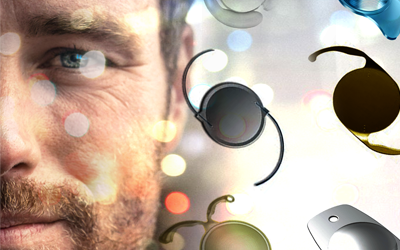
Your ophthalmologist will help you decide on the type of IOL that will replace your cloudy lens.  There are IOLs available to treat nearsightedness (myopia), farsightedness (hyperopia), and astigmatism.  IOLs usually provide either near or distance vision:  these single focus lenses are called monofocal IOLs.  Some newer IOLs can provide for near, intermediate, and distance vision:  these multiple focus lenses are called multifocal IOLs.  IOLs that treat astigmatism are called toric IOLs.  You can also have one eye corrected for near vision, and the other for distance vision, a choice called monovision.

What is astigmatism?  Are their other treatments for it?
Patients with nearsightedness and farsightedness often also have astigmatism.  An astigmatism is caused by an irregularly shaped cornea; instead of being round like a basketball, the cornea is shaped like a football.  This can make your vision blurry.  In addition to toric IOLs, astigmatism can be reduced by glasses, contact lenses, and refractive surgery (LASIK or PRK).  There is also a procedure called a limbal relaxing incision (LRI), which can be done at the same time as the cataract operation, or as a separate procedure.  A limbal relaxing incision (LRI) is a small cut or incision the ophthalmologist makes into your cornea to make its shape rounder.  Any attempt at astigmatism reduction could result in over- or under-correction, in which case glasses, contact lenses, or another procedure may be needed.

What are the major risks of cataract surgery?
All operations and procedures are risky and can result in unsuccessful results, complications, injury, or even death, from both known and unknown causes.  The major risks of cataract surgery include, but are not limited to a droopy eyelid, bleeding; infection; injury to parts of the eye and nearby structures from the anesthesia, the operation itself, or pieces of the lens that cannot be removed; high eye pressure; a detached retina, loss of vision, and even (rarely) blindness.  The major risks of a limbal relaxing incision are similar to those for cataract surgery, but also include damage to the cornea and scarring; as well as under- or over-correction of the astigmatism.

Depending upon your eye and the type of IOL, you may have increased night glare or halos, double vision, ghost images, impaired depth perception, blurry vision, and trouble driving at night.   The ophthalmologist might not be able to put in the IOL you choose.  In addition, the IOL may later need to be repositioned or replaced.

Depending upon the type of anesthesia, other risks are possible, including cardiac and respiratory problems, and, in rare cases, death.

There is no guarantee that cataract surgery or astigmatism reduction will improve your vision.  As a result of the surgery and/or anesthesia, it is possible that your vision could be made worse.  In some cases, complications may occur weeks, months or even years later.  These and other complications may result in poor vision, total loss of vision, or even loss of the eye in rare situations.  You may need additional treatment or surgery to treat these complications.  This additional treatment is not included in the fee for this procedure.

Cataract Surgery Essentials - Macular Degeneration and Cataract Surgery

There has been a lot of controversy surrounding cataract surgery and macular degeneration.  A few years ago there were some studies published that suggested a link between cataract surgery and worsening macular degeneration.  Inflammation may have a role in macular degeneration and we know that there is transient inflammation after cataract surgery.  That being said, we also know that the view into the eye improves after cataract surgery so many surgeons felt that what was really happening is that we were better able to detect changes in the retina after cataract surgery.

Indeed, as of June 2009 the most recent studies do not show any link between cataract surgery and worsening macular degeneration.  I have discussed this very issue with multiple retina specialists and the consensus is that if there is a significant cataract it should be removed as it is much easier for them to follow and treat retinal disease once the cataract has been replaced with a clear intraocular lens.

 
icon for podpress  Macular Degeneration and Cataract Surgery [0:01:44m]: Play Now | Play in Popup | Download

You don’t have to wait to hear the rest of the Audio series. The entire Cataract Surgery Essentials Audio Series (including the audio for this post)  is now available as a CD that can be purchased online from CDBaby or eBay (just search “Cataract Surgery Essentials” to find it).  Or,  you are welcome to stop by my San Gabriel office and pick up a copy.

Cataract Surgery Essentials - Glaucoma and Cataract Surgery

With cataract surgery, there is a risk that your eye pressure could spike up for a period of time after surgery.  Fortunately this pressure elevation is usually transient and treatable with drops, laser, or separate surgery if required.  It is rare in an otherwise health eye for this pressure elevation to cause a loss of vision.

However, if you have Ocular Hypertension or glaucoma you may be at an increased risk of loss of vision from a post-operative spike in eye pressure.  Although the intraocular pressure can transiently rise after an otherwise uncomplicated surgery, an eye with glaucoma cannot always tolerate such an elevation in pressure, even if only temporarily.  If I think you are at significant risk of this happening I will most likely have you see a glaucoma specialist prior to scheduling cataract surgery.

 
icon for podpress  Glaucoma and Cataract Surgery [0:01:29m]: Play Now | Play in Popup | Download

You don’t have to wait to hear the rest of the Audio series. The entire Cataract Surgery Essentials Audio Series (including the audio for this post)  is now available as a CD that can be purchased online from CDBaby or eBay (just search “Cataract Surgery Essentials” to find it).  Or,  you are welcome to stop by my San Gabriel office and pick up a copy.

Cataract Surgery Essentials - Diabetes and Cataract Surgery

While it is true for most people that cataract surgery is a “piece of cake,” for surgery to go well it helps to have an otherwise healthy eye. If you have any eye disease in addition to the cataract this will increase the risk that the final vision will be limited after surgery.
Unfortunately, the general experience of most people who have had cataract surgery does not apply when there is a history of diabetic retinopathy.  People with otherwise healthy eyes might note that their vision was better before they even left the operating room.   However, most of these people do not have diabetic retinopathy.
Eyes with a known history of retinopathy are at higher risk of macular edema (or swelling of the retina), and infection. Treating these conditions can be challenging, requiring prolonged treatment with steroids or the other topical medications, injections in the eye, as well as additional laser treatment.
The most important thing someone with Diabetes can do to limit these additional risks of cataract surgery is to maintain good control of your blood sugar.

 
icon for podpress  Diabetes and Cataract Surgery [0:01:50m]: Play Now | Play in Popup | Download

You don’t have to wait to hear the rest of the Audio series. The entire Cataract Surgery Essentials Audio Series (including the audio for this post)  is now available as a CD that can be purchased online from CDBaby or eBay (just search “Cataract Surgery Essentials” to find it).  Or,  you are welcome to stop by my San Gabriel office and pick up a copy.

Cataract Surgery Essentials - Can My Cataract Come Back?

Once your cataract has been removed, it won’t come back.  That being said, it is possible for your vision to worsen after surgery from what’s called a posterior capsular opacification.  Simply stated, as the capsular bag shrink wraps the new lens in place, it can opacify or scar resulting in glare, halos, or blurred vision.  Because these symptoms are similar to those of a cataract, this used to be called a “secondary cataract.”  However, this is a misnomer as it is not actually a cataract, but rather your body’s natural healing response that has just worked a little too well. The risk of this happening to you is somewhere between 5 and 15% which is great considering that it used to be so common surgeons would just tell patients to expect it.

Fortunately, this membrane can be removed with a laser. The laser is painless and the procedure does not take very long although you will be in the building for a few hours as we need to dilate your eyes prior to surgery as well as check the eye pressure about an hour after the laser.

There are very few risks of the laser.  99% of people who have it done notice an improvement within days.  As with any surgery on the eye, there are risks which we would discuss in more detail prior to the laser if you needed it.

 
icon for podpress  Can My Cataract Come Back? [0:02:12m]: Play Now | Play in Popup | Download

You don’t have to wait to hear the rest of the Audio series. The entire Cataract Surgery Essentials Audio Series (including the audio for this post)  is now available as a CD that can be purchased online from CDBaby or eBay (just search “Cataract Surgery Essentials” to find it).  Or,  you are welcome to stop by my San Gabriel office and pick up a copy.

Cataract Surgery Essentials - How to Care for Your Eye After Surgery

The Day After Surgery you should arrive at my office at the scheduled time (usually this is in the morning).  Please bring your drops with you.

My staff will remove your eye shield and check your vision.  Most people who do not have other diseases of the eye will experience significant improvement in their vision.  However, if you have any other problems with your eye including astigmatism your vision may or may not be better at the first post-operative visit.  There are many variables that can affect vision early after surgery.   Additionally, unless you opted for one of the newer advanced intraocular lenses you will not have your clearest vision until you get your new spectacles or contact lenses.

Once I have seen you in my office, it will no longer be necessary to wear the shield over he eye during the day.  However, you will need to wear it at night when you are sleeping for one more week.  You will continue to use your eyedrops as instructed.  Additionally, we will give you some wraparound sunglasses.  You may find that when you are out in the sun your eyes are sensitive to bright light.  You do not have to wear these sunglasses but most people find that they provide some added comfort.  Generally, I will want to see you again sometime over the next ten days.  You should not have any problems during this period.  As my patient, if you have any questions, concerns, pain, or loss of vision, I want you to call me anytime of day or night.

After your second post-operative visit with me it’s likely that I will ask you to discontinue using the shield that you have been wearing over the eye.  Additionally, my staff will instruct you how to taper your eyedrops over the following three to four weeks.  Around the time you are finishing your drops, you will be able to return to your optometrist to have your eye checked for new glasses.

 
icon for podpress  How to Care for Your Eye After Cataract Surgery [00:02:32m]: Play Now | Play in Popup | Download

You don’t have to wait to hear the rest of the Audio series. The entire Cataract Surgery Essentials Audio Series (including the audio for this post)  is now available as a CD that can be purchased online from CDBaby or eBay (just search “Cataract Surgery Essentials” to find it).  Or,  you are welcome to stop by my San Gabriel office and pick up a copy.

Cataract Surgery Essentials - What You Should Experience the Day of Surgery

The big day has arrived.  No doubt you will feel some anxiety about having your cataract removed the morning of surgery.  Relax.  Once you get to the surgery center the staff will do everything they can to relieve any anxiety you may be experiencing.

A quick reminder: do not eat or drink anything the morning of surgery.  It is OK to take a sip of water with your heart medications that morning, but nothing else.  No coffee.  No orange juice.  Nothing other than what you need to get your heart medications swallowed.  If you forget and do eat or drink something we will have to delay or even reschedule your surgery for another day.

When you arrive at the surgery center there will be some minimal additional paperwork to fill out.  After you finish this someone will take you from the reception area into the pre-op area where you will change out of your clothing into a hospital gown.

During the time you are in the surgery center you may be asked multiple times “what eye are you having surgery on?”  You may be thinking, “My God, don’t they know?  Maybe I’m the wrong place.”  There’s no need for worry.  The staff are instructed to check and re- check to ensure we are operating on the correct eye.  At some point before surgery actually begins, a purple mark will even be made on your forehead indicating which eye is to have cataract surgery.  This is for your protection.

Prior to surgery multiple drops will be placed in your eye multiple times.  Although the drops you use at home must be spaced at least five minutes apart, the drops in the hospital will be given to you one right after the other.  This is OK.

It may take 45 minutes to two hours for your eye to dilate enough for optimal surgery.  Be patient.  The larger your pupil, the easier it is for me to remove it.  I will check your pupil when you arrive in the operating room.  If it needs to be dilated further I can mechanically stretch it once surgery has begun.

An IV will be placed in your arm either in the pre-operative holding area or in the operating room.  Once in the operating room the anesthesiologist will give you something through the IV to relax you.  One of the effects of this medication is short-term amnesia.  So, if you are having your second eye done, don’t be surprised if you don’t remember all of these things being done when you had your first cataract surgery.  This is a very common feeling.

A blood pressure cuff will be placed on your other arm.  This is necessary for monitoring this critical vital sign during surgery.  Periodically this will inflate and give you a sense of pressure.  Just relax and the pressure will go away.

You will be in the operating room for about 45 minutes to an hour.  About half of this time is spent preparing for the actual surgery.

I believe music works both to relax you and assist me with the rhythm of surgery.  If you have a particular type of music you would like me to play during the surgery, let me know.  I have over 9,000 songs on my iPod which cover almost all genres.  Unfortunately, County music is not one of those so if you’d like to listen to Country western music you’ll need to bring in your own CD.

During the actual surgery you will hear buzzing and bells.  There may be a sense of pressure in the eye and you may feel fluid running down the side of your face.  This is all normal.

You should not feel pain during the surgery.  If you do, let me know and I will instruct the anesthesiologist give you additional anesthetic.

After surgery a shield will be placed over your surgery eye, and you will be transferred to a recovery area for an hour or so while the nurses check your vitals and confirm that you have recovered from the anesthetic.

The entire process from the time you arrive to the time you leave the hospital can take from three to five hours.

The afternoon and evening of surgery you may have the sense that there is something in your eye like a grain of sand.  This is normal and should be relieved by using the drops you were using prior to surgery.  If needed, you may take Tylenol for relief.  You should not have significant pain.  If you do, please call my office.

Although there will be a shield over your eye, you will need pull this down in order to continue to use the same eye drops you were using prior to surgery.

Finally, although it seems obvious, I’ve learned the hard way never to assume anything so I’m going to say it: Don’t rub your eye.

Audio: The audio file for this post is larger than my hosting plan allows.  As soon as I figure a way around this limitation I will post a link to the audio file.  Don’t want to wait? The entire Cataract Surgery Essentials Audio Series (including the audio for this post)  is now available as a CD that can be purchased online from CDBaby or eBay (just search “Cataract Surgery Essentials” to find it).  Or,  you are welcome to stop by my San Gabriel office and pick up a copy.

Cataract Surgery Essentials - New Options for Cataract Surgery

Cataract surgery and coffee have something in common.  Five to ten years ago they shared this attribute: there were few, if any options. You wanted coffee?  OK, would you like that with cream or sugar?  Had cataracts?  Would you like…  Actually, there were no real options five to ten years ago.  If you needed surgery it was scheduled and your surgeon chose the intraocular lens (also known as an IOL).

Now, however, there is a dizzying array of options available to anyone who saunters up to the barista or the cataract surgeon.  Coffee? Would you like that in a Grande or Venti?  Cream, lowfat milk, or soy?  Vanilla, sugar-free vanilla, caramel, mocha, or flavor-of-the-week? The same is now true of cataract surgery.  Would you like a spherical or aspheric IOL?  Astigmatism correction?  How about the ability to see distance, intermediate, and up close?  , You can now select for two out of the three — a major improvement over just a few years ago.

So how do you choose?  As a cataract surgeon who has performed over 2,000 cataract surgeries, I can tell you it is not an easy decision. You only have two eyes so it’s an important decision to make if you are presently in need of cataract surgery.  (If you’re not in need now, you should be assured that the technology improves every year – increasing your menu of choices by the time you’re ready.).  The best way to begin is to consider your goals.

With coffee, there is one initiating decision: caffeinated or decaf?  With cataract surgery there is one key question: “Do you mind wearing glasses?”  If the answer is “No,” then you’re done.  Stop listening to this track and skip to the next because the rest of what I am going to say is not applicable to you.

If you dream of throwing away your glasses after cataract surgery, keep dreaming.  There are currently no intraocular lenses that will allow you to do that.  If, however, you have certain activities that you would like to do without glasses and wouldn’t mind wearing glasses “occasionally,” then listen on - because the newer advanced intraocular lenses can provide for that.  Following is a list of available alternatives sorted by need.  Simply find the description that fits you best to find the intraocular lens for you.

One caveat: all of the options except the first will require an out-of-pocket expense.  Medicare and most insurances do not pay for the intraocular lens “upgrades.”  If you want your insurance to cover the entire tab then Option #1 is for you.

Option #1:
You don’t mind wearing glasses all the time. Congratulations.  The standard intraocular lens covered by insurance will meet your needs just fine and the money you’ll have saved should pay for about two years worth of coffee at the local Starbucks.  Take note, however, Medicare does not cover the fee for refraction (the exam to determine what glasses you will need after surgery), so save back $50-100 (plus the cost of those designer frames).

Option #2: You would like good distance vision without glasses but don’t mind wearing glasses to use the computer and read. You may be a candidate for either an aspheric or toric intraocular lens.  The aspheric intraocular lens corrects what are called “higher order aberrations” resulting in excellent distance vision.  However, if your cornea has any significant astigmatism, this will have to be corrected with either a “toric” intraocular lens or corneal refractive surgery.  Both of these would be at an additional cost.

Option #3: You would like good distance and intermediate (computer) vision without glasses but wouldn’t mind wearing glasses for reading. You have two options available to you: the ReZoom multifocal intraocular lens or the Crystalens accommodating intraocular lens.

The ReZoom intraocular lens simultaneously focuses two images onto your retina so you can see both distance and intermediate objects at the same time. The trade-off, however, is that there will be small circles (halos) around lights at night.  Most people get used to this with time but a small number of people (about 5%) find these halos to be a significant distraction.

The Crystalens uses what is called pseudo-accommodation: it uses tiny muscles in the eye to move the lens back and forth changing the focusing power of the intraocular lens.  Two other lenses that also use pseudo-accommodation are the Synchrony and the Tetraflex.  At the time of this recording, however, only the Crystalens was available as an FDA approved lens.  Although there are no halos associated with this type of intraocular lens, not all people are able to “train” their eye muscles sufficiently after surgery to get the desired range of vision.  Bottom line: if you want a range of daytime vision without halos but are willing to use reading glasses for near tasks then this lens might be for you.

Option #4: You would like good distance and reading vision without glasses but wouldn’t mind glasses for intermediate (computer) vision. You also have two options available to you: the Alcon ReSTOR intraocular lens or the AMO Tecnis intraocular lens.  Both use what is called “diffractive optics” to split light into both a distance and a near image.  Since two images are simultaneously focused on your retina, there will be small circles (halos) around lights at night.  As with other multifocal intraocular lenses, most people get used to this with time but a small number of people (about 5%) find these halos to be a significant distraction.  Additionally, glasses may still be required for intermediate work such as computer use.

An additional caveat: no matter which intraocular lens you choose, you may still need night-time glasses.  The reason for this is that your pupil dilates in the dark allowing rays of light from the edges of your cornea into the eye.  These rays are focused at a different strength than those from the center of the cornea so you end up a little near-sighted when driving.  Generally, a simple pair of night-driving spectacles correct this if it bothers you.

So, which one is the best lens?  The answer is “it depends.”  It depends on what your vision needs and desires are.  Do you care about wearing glasses or not?  How much are you bothered by bifocals?  The answers to these questions will allow you and your surgeon to choose the best lens for you.

Audio: The audio file for this post is larger than my hosting plan allows.  As soon as I figure a way around this limitation I will post a link to the audio file.  Don’t want to wait? The entire Cataract Surgery Essentials Audio Series (including the audio for this post)  is now available as a CD that can be purchased online from CDBaby or eBay (just search “Cataract Surgery Essentials” to find it).  Or,  you are welcome to stop by my San Gabriel office and pick up a copy.

Cataract Surgery Essentials - Will I Need Glasses After Cataract Surgery?

One very common misperception is that you will be able to see well after cataract surgery without glasses.  Unfortunately, this is not true for most people.  You may recall my discussion in an earlier segment about how the cornea and lens work together to focus light on your retina.  With cataract surgery the lens of the eye is replaced, but nothing is done to the cornea.  With standard cataract surgery any astigmatism or irregularity in the cornea will remain after surgery.  So, if you needed glasses before you developed your cataract you’ll probably still need them after surgery for activities such as reading and driving.  However, there are refractive surgery options available to give you a wider range of vision without the use of glasses.  I’ll discuss these options in the next segment.

 
icon for podpress  Will I Need Glasses After Cataract Surgery? [00:01:36m]: Play Now | Play in Popup | Download

Don’t want to wait to hear the rest of the Audio series? The entire Cataract Surgery Essentials Audio Series (including the audio for this post)  is now available as a CD that can be purchased online from CDBaby or eBay (just search “Cataract Surgery Essentials” to find it).  Or,  you are welcome to stop by my San Gabriel office and pick one up.

share

Bad Behavior has blocked 92 access attempts in the last 7 days.